The house is a work of art
Frank Lloyd Wright exalted the individual and made ordinary life beautiful. But his life was marked by scandal and grief
by Andrew Deming
Edited by Marina Benjamin
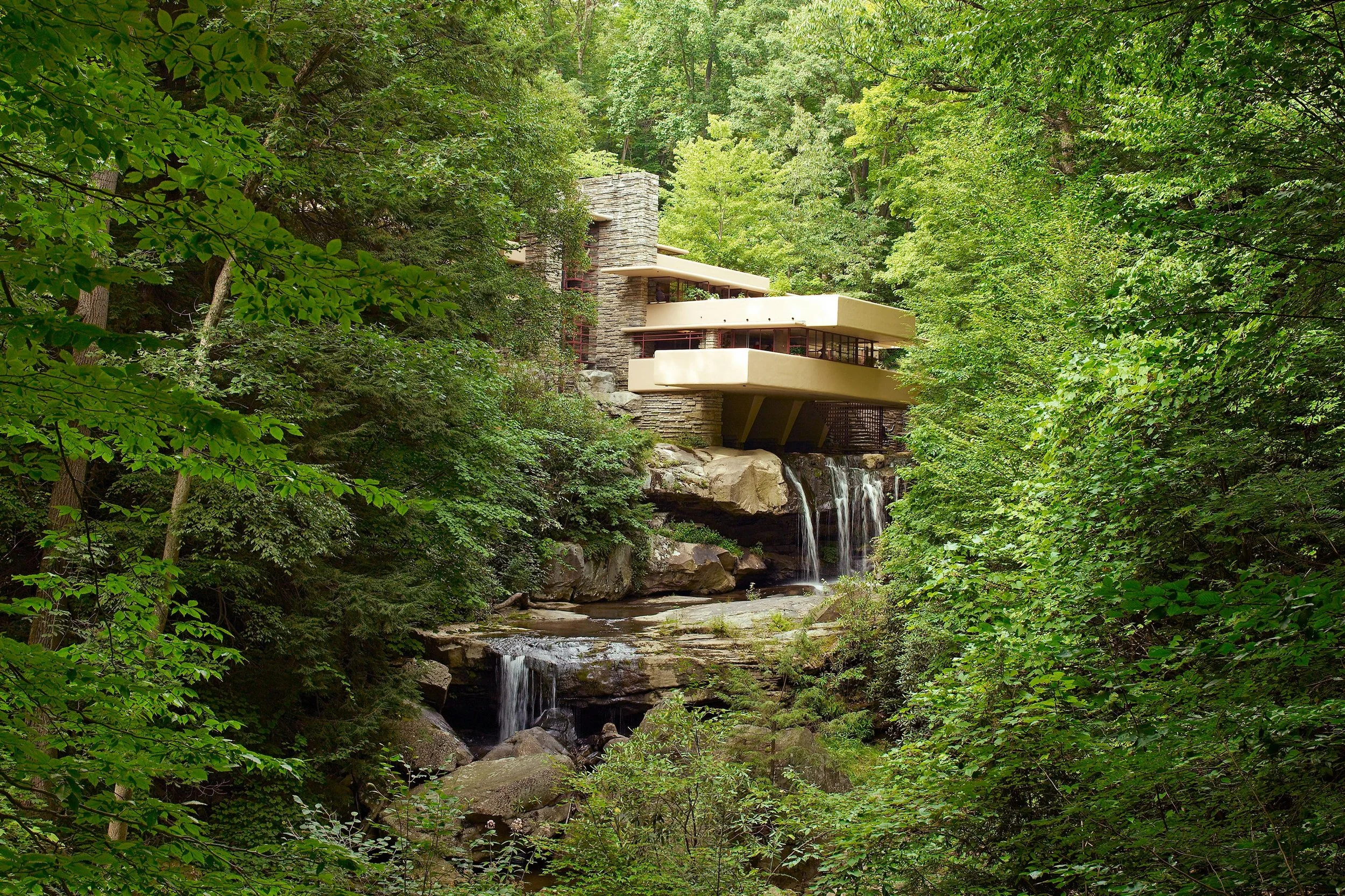
I was 10 when Frank Lloyd Wright first entered my consciousness. I was sitting cross-legged on the beige carpet of my bedroom in a tract house in Melbourne, Florida, watching a Ken Burns documentary about Wright on PBS. Both my parents were schoolteachers, interested in history and travel, but architecture belonged to another planet entirely. Then there was Wright, whose buildings felt impossibly different from anything I had seen. His rooms were not rectangles to be filled but worlds unto themselves—shadows, stone, light pouring in sideways. His spaces, at once intimate and vast, were shaped by ideas I had no words for, yet immediately recognised. His work reached backwards and forwards simultaneously: primitive shelter reimagined with an aesthetic that felt both timeless and unmistakably American.
Only much later did I understand how unusual that revelation was: that a child in a Florida subdivision, with no vocabulary for architecture, could be moved so deeply by work created long before he was born. Wright has that effect on people. His buildings reach us before we can explain why. But the Wright who astonishes newcomers sits uneasily beside the Wright who troubles experts. His life, like his work, resists easy containment. He was born in 1867 and remained active until his death in 1959, spanning an era in which American society’s moral frameworks shifted dramatically. His own beliefs, expressed bluntly late in life, championed radical individualism, artistic ambition, and a vision of democracy that remains as provocative as the buildings themselves.